| Family | Rose Family |
|---|---|
| Points to Observe | Gokurakudaira |
| Flowering Period |
/ |
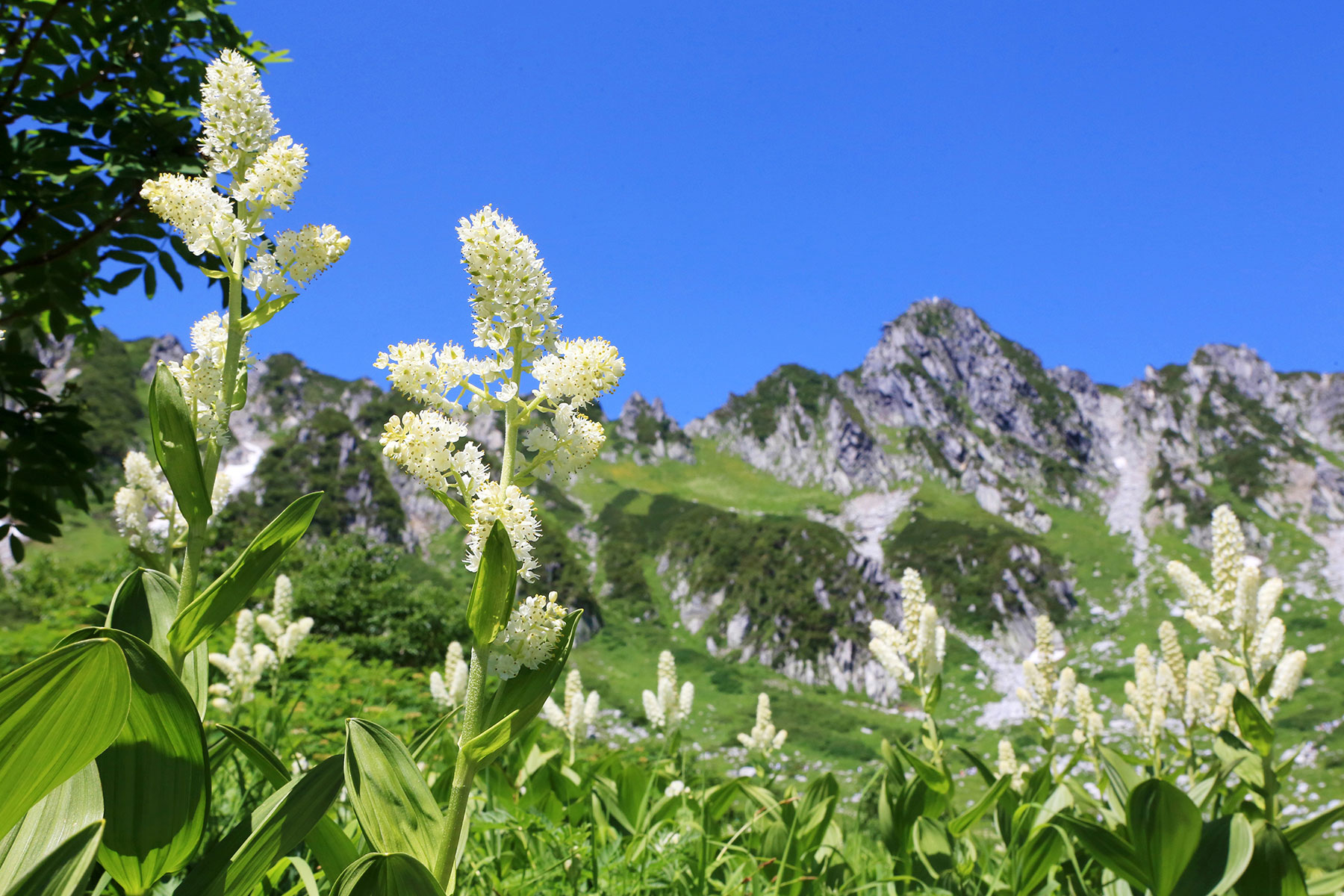
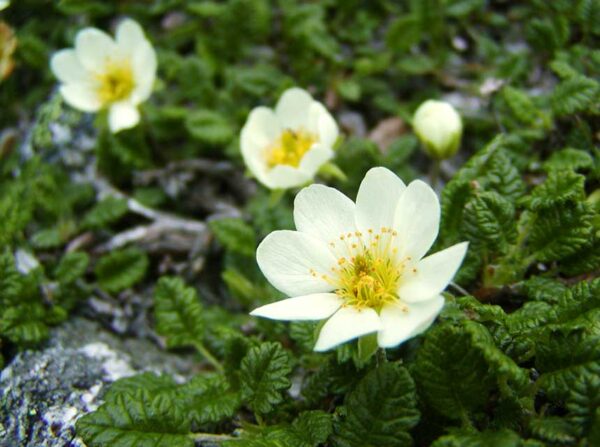
The sight of it glistening in the morning dew and bathed in sunlight is truly beautiful and full of charm. It is a very small, grass-like deciduous plant with typically eight petals. Its seeds are covered in long hairs. The branches crawl along the ground and branch out, forming a mat-like spread, and the leaves—which are oblong, 1–2.5 cm long, and densely covered with downy hairs on the underside—are oblong. Unusually for an alpine plant, its name is derived from a person named Naganosuke Sugawa.
| Family | Ranunculus Family |
|---|---|
| Points to Observe | Senjojiki Cirque, Hatchozaka |
| Flowering Period |
/ / |
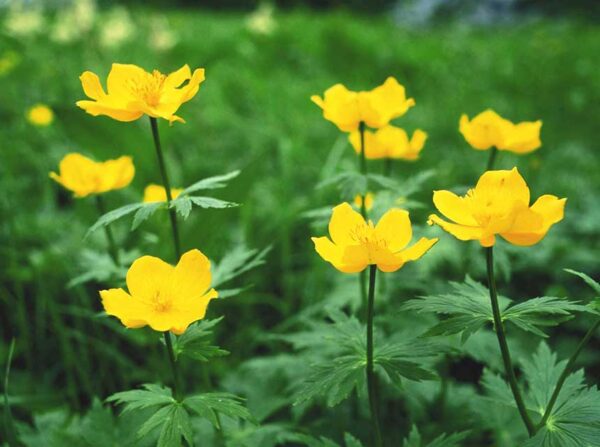
A perennial plant of the genus *Cimicifuga*. “Shinano” refers, of course, to Nagano Prefecture. Since this flower is common throughout the prefecture, it was given this Japanese name. The golden-yellow flowers are 3.5–4.5 mm in diameter. The petals—which vary in both size and shape—are modified sepals; the actual petals are very small and shorter than the stamens. As a result, the flowers appear greenish before blooming. The stems are erect and thick, and the leaves are palmately lobed into five segments.
| Family | Rose Family |
|---|---|
| Points to Observe | Senjojiki Cirque, Gokurakudaira, Hondake |
| Flowering Period |
/ / |
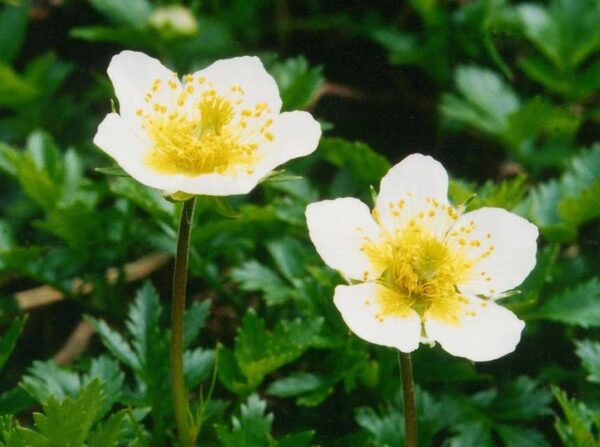
The origin of its unique name comes from a children’s toy windmill. It is said that the name was derived from “chigokuruma” because the fruit resembles the shape of a child’s toy windmill. The leaves are about 6 to 10 cm long. The branches crawl along the ground, and the plants grow in clusters to form a field of flowers. The flowers are white. A single, charming flower blooms at the tip of the flower stalk. Each flower has five petals, numerous yellow pistils and stamens, and after flowering, the styles elongate and spread out radially.
| Family | Lily Family |
|---|---|
| Points to Observe | Senjojiki Cirque |
| Flowering Period |
/ / |
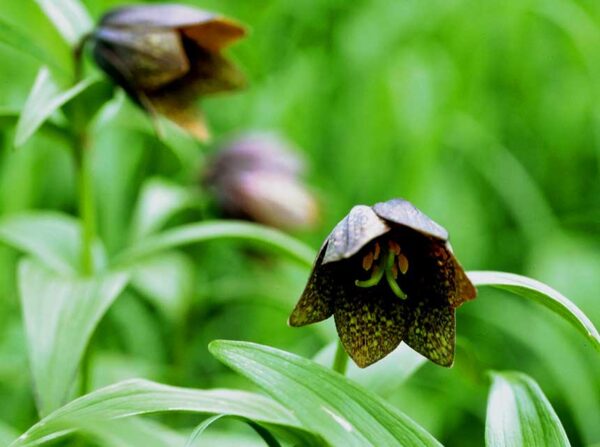
A plant of the genus *Baimo* (an alpine form of the parent species, the black lily) that grows wild in alpine meadows. It is also known as “Black Salena.” Its dark purplish-brown, bell-shaped flowers are both beautiful and unique. One or two flowers appear at the tip of the stem, and they feature fine yellow speckles. The plant has an underground corm, and the stem grows to a length of 10–30 cm. The leaves are alternate but are arranged closely together in 2–3 whorls.
| Family | Iwaume Family |
|---|---|
| Points to Observe | Senjojiki Cirque |
| Flowering Period |
/ / / |
It is called “Iwakagami” because its leaves have a glossy sheen. The leaves are evergreen, round, and measure 2 to 4 cm in both length and width. The plant produces 2 to 4 flowers at the tips of its stems. After flowering, reddish berries form, and the leaves also turn red in the fall and remain on the plant through the winter.
| Family | Iwaume Family |
|---|---|
| Points to Observe | Gokurakudaira, Nakadake |
| Flowering Period |
/ / |
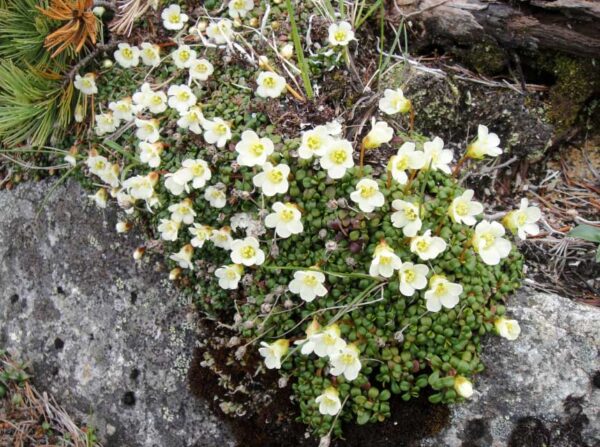
Its name comes from the fact that it grows wild on rocky terrain and bears flowers resembling those of the plum tree. It is mainly found clinging to rocky areas and gravelly ground near ridges. In the fall, its leaves turn color. The leaves are oblong, 6–10 mm long. The flowers are creamy white, occasionally tinged with pale red, and bloom facing upward. The lateral branches form a cushion-like structure due to the dense growth of thick, leathery leaves, making it difficult to tell at first glance that it is a woody plant.
| Family | Rose Family |
|---|---|
| Points to Observe | Near Kengai Pond |
| Flowering Period |
/ / |
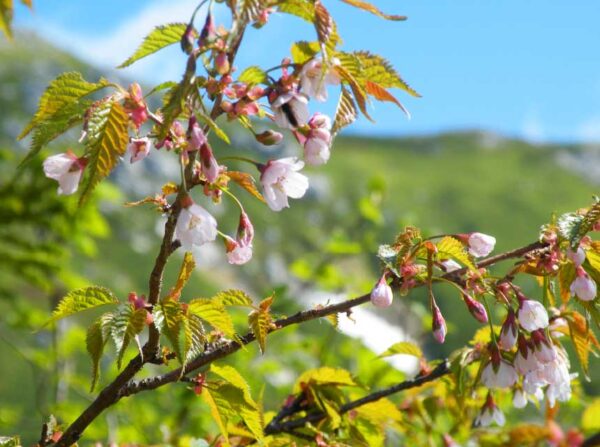
This is a wild species of cherry blossom, also known as Minezakura. The flowers range in color from pale pink to white, with the hue becoming deeper toward the center. The flowers are 2–3 cm in diameter. This species prefers to grow wild in cool climates, such as on mountain slopes. It is found from central Honshu northward, and tends to prefer higher elevations the further south it grows. It does not grow very large, typically reaching the size of a small to medium-sized tree, with a height of no more than 5–10 meters.
| Family | Lily Family |
|---|---|
| Points to Observe | Senjojiki Cirque, Gokurakudaira |
| Flowering Period |
/ / |
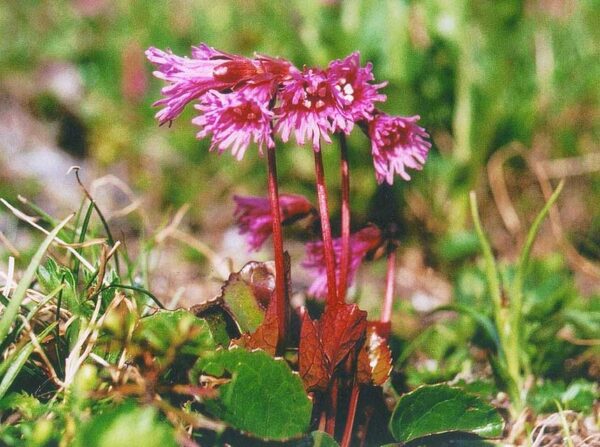
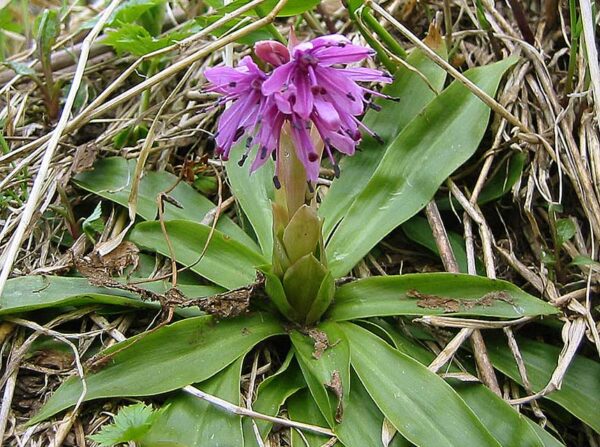
The “Shōjō” is a mythical creature from Chinese folklore. It is said to resemble a monkey, understand human speech, and have a fondness for alcohol. This flower is said to have been named after the creature because its red blossoms evoke the flush of a drunkard’s face, and its leaves resemble traditional Japanese hakama trousers. The leaves do not wither even in winter and grow in large numbers in a radial pattern from the base of the plant. Each leaf is 5–10 cm long and has a pointed tip. However, as time passes, the flowers fade to a dull yellow-green color. It also grows in low-lying areas.
| Family | Azalea Family |
|---|---|
| Points to Observe | Gokurakudaira, Maedake, Hondake |
| Flowering Period |
/ / |
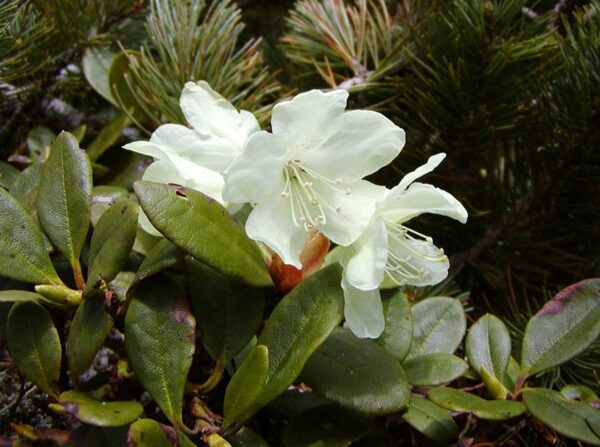
Because its branches are curved and the straight portions are less than 1 shaku (about 30.3 cm) long, it is called “Shakunashi”; the term “Shakunage” is a corrupted form of this name. The flowers are 2.5 to 3 cm in diameter and are usually pale yellow, though white and very pale pink varieties are also found. The leaves grow in whorls at the tips of the branches and are 3–6 cm long. The upper surface has sunken veins that create fine wrinkles. It is an evergreen shrub.
| Family | Rose Family |
|---|---|
| Points to Observe | Senjojiki Cirque, Gokurakudaira |
| Flowering Period |
/ / / |
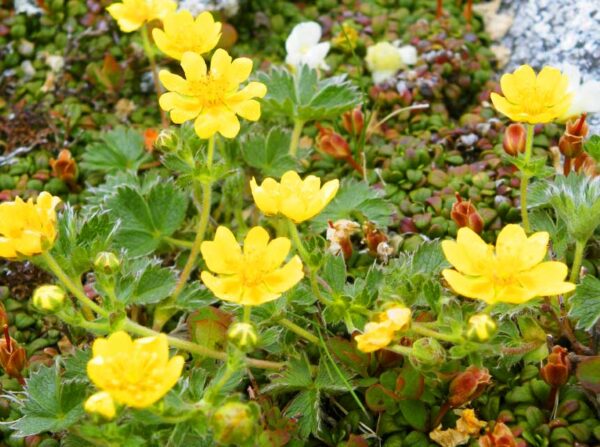
A perennial plant of the genus *Kijimushiro* that grows wild primarily in sandy and grassy areas. The leaves resemble those of a strawberry, with three leaves clustered at the tip of the petiole and clearly defined serrations. The flowers are about 2 cm in diameter, with bright yellow petals that are darker at the base. The rhizomes are short and branch out laterally, forming large clumps.