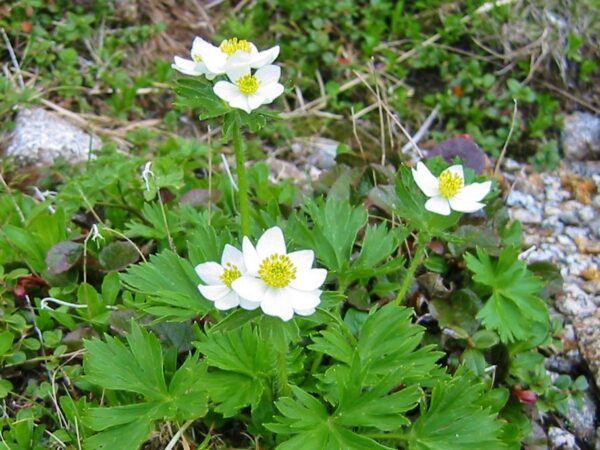
| Family | Ranunculus Family |
|---|---|
| Points to Observe | Senjojiki Cirque, Gokurakudaira, Hatchozaka |
| Flowering Period |
/ / / |
The leaves have long petioles and are deeply lobed, resembling a palm. The tip of the flower stalk branches into several stems, each bearing a single flower. The flowers are about 2 cm in size, and after blooming, they produce black berries. Written in kanji as “白山一華,” the name means “a single flower” (ichige) discovered on Mount Hakusan in Ishikawa Prefecture.
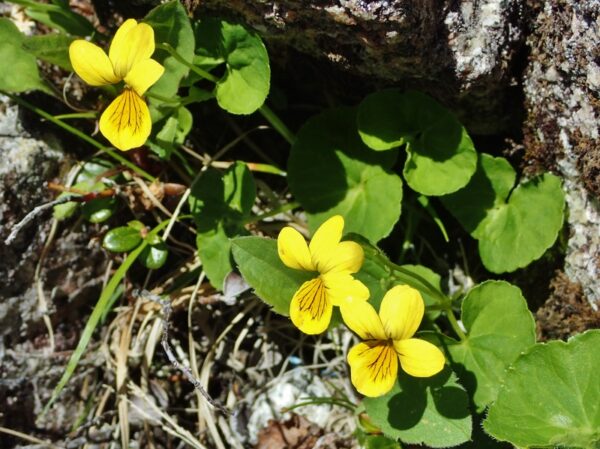
| Family | Violet Family |
|---|---|
| Points to Observe | Senjojiki Cirque |
| Flowering Period |
/ / |
Although the flowers closely resemble the spider violet, the species most commonly found within the Senjojiki Cirque is the yellow-flowered heartleaf. Its leaves are heart-shaped with rounded tips, and their surfaces are covered with fine hairs, giving them a matte appearance. The flowers are yellow with deep purple streaks.
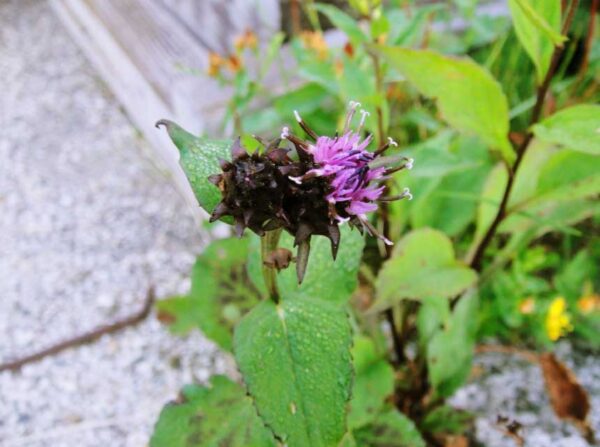
| Family | Aster Family |
|---|---|
| Points to Observe | Senjojiki Cirque, Gokurakudaira, Hatchozaka |
| Flowering Period |
/ / |
A perennial that grows in grasslands of the subalpine to alpine zones. Taxonomically, it is considered a variety of the Shirane thistle; it is characterized by flowers that are slightly larger than those of the base species and the absence of a flower stalk. It grows to a height of about 30–50 cm, and its flowers are pale purple. The name is said to derive from “Hiren” (飛廉), the conventional Japanese kanji name for “Hire-azami,” to which “Tō” (唐) was added because the flower evokes an exotic appearance; it was named “Kurotōhiren” because the flowers have a blackish tint.
| Family | Gentian Family |
|---|---|
| Points to Observe | Senjojiki Cirque, Gokurakudaira, Maedake |
| Flowering Period |
/ / |
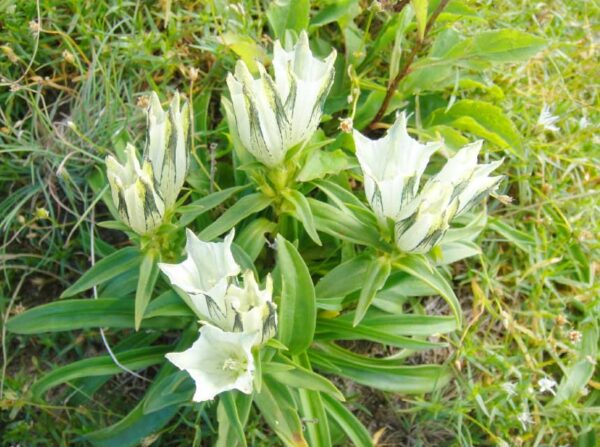
The leaves are glossy, and the flowers are a pale yellow—rare among gentian species—with green spots on the petals. Like the alpine gentian, it is characterized by the fact that the flowers open when exposed to sunlight and close when in the shade. Two to three flowers, each 3.5 to 4 cm long, bloom at the tips of the stems. The “Tōyaku” in its name, “Tōyaku Ryūtan,” refers to senburi (Phytolacca japonica), and the name derives from the fact that, like senburi, it can be used as a stomach remedy.
| Family | Aster Family |
|---|---|
| Points to Observe | Entire Area |
| Flowering Period |
/ / |
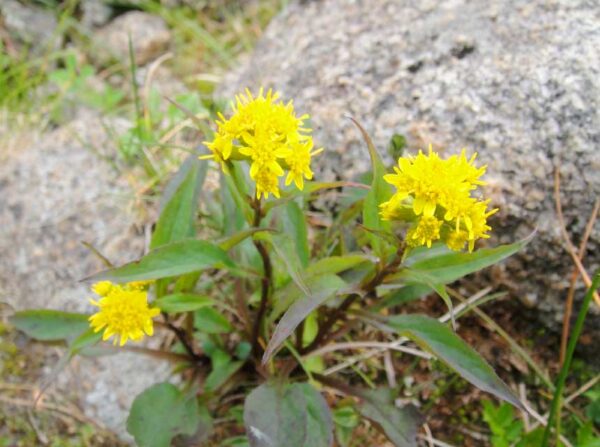
The name “Kirin” comes from a mythical creature in Chinese mythology; it is said to have yellow fur, and the color of the flower is said to resemble that fur. The flowers are 1.5 cm in diameter and typically grow in clusters at the tips of the stems. It is so similar to “Akino Kirinsou,” which blooms in lowland areas, that the two are indistinguishable; this is the alpine variety.
| Family | Saxifrage Family |
|---|---|
| Points to Observe | Senjojiki Cirque |
| Flowering Period |
/ / |
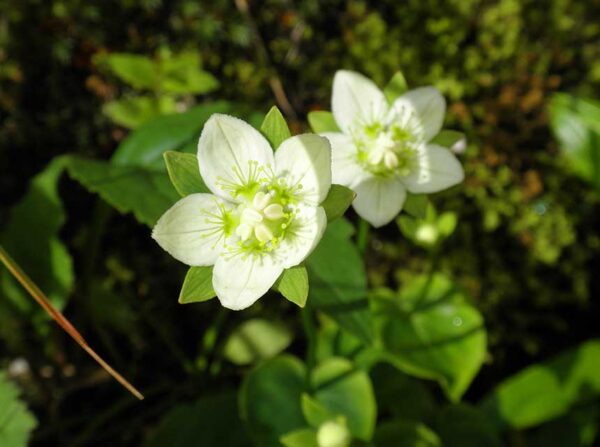
The flowers resemble plum blossoms in appearance. They are about 2 cm in diameter, with a staminode between the stamens and pistil, and are deeply lobed in a palm-like pattern. Species with 12 to 20 lobes are classified as *Umebachisou*, while those with 7 to 11 lobes are classified as *Koumebachisou*; however, the specimens found at Senjojiki have as many as 11 to 15 lobes. The leaves are heart-shaped. They emerge from the base of the plant, but one leaf also grows on the flower stalk.
| Family | Ranunculus Family |
|---|---|
| Points to Observe | Senjojiki Cirque, Hatchozaka |
| Flowering Period |
/ / |
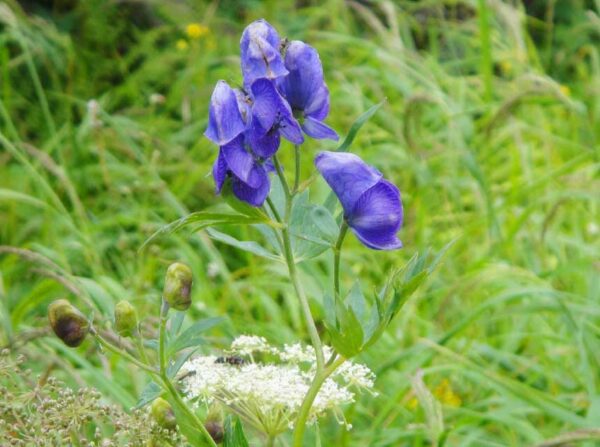
“Sakurai” is a person's name, and ‘Uzu’ is said to be the traditional Chinese medicine name for the plant “Tori-gashira” (Aconite), which has curved hairs on its flowers. The leaves are 5–12 cm long and are 3–5-lobed. There is a species in the Aconitum genus called Kitazawabushi, and there are theories that Sakurai-uzu is either a variety of it or is itself Kitazawabushi. Incidentally, Kitazawabushi is designated as an endangered species. It is also a flower that is difficult to distinguish from Takane-trikabuto.
| Family | Aster Family |
|---|---|
| Points to Observe | Senjojiki Cirque, Gokurakudaira, Hatchozaka |
| Flowering Period |
/ / / |
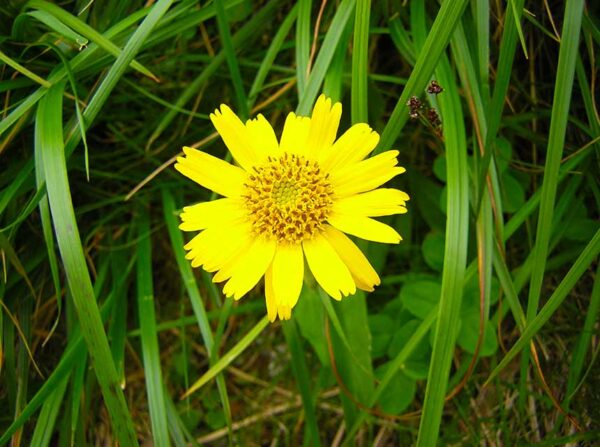
As its name suggests, the shape of its leaves resembles long rabbit ears. The flowers are yellow and 3–5 cm in diameter. It has a single stem, which, like the leaves, is covered with hairs. The basal leaves are spatulate, and opposite leaves grow along the stem. It was once affectionately known as “Kinguruma” (Golden Chariot).
| Family | Poppy Family (sometimes included as part of the Poppy Family) |
|---|---|
| Points to Observe | Gokurakudaira, Hoken Mountain Lodge, Near Kiso Cabin |
| Flowering Period |
/ / / |
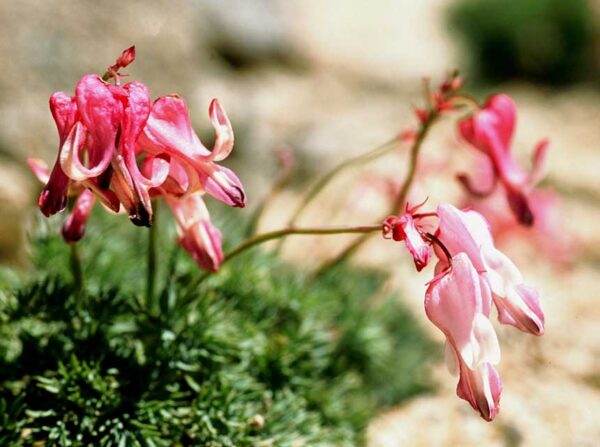
It is, as everyone knows, the “Queen of Alpine Plants.” In addition to the beauty of its pale red flowers, its nobility—the ability to bloom even in harsh environments where other plants cannot survive—seems to be the origin of this nickname. It has four petals—two on the outer layer and two on the inner layer. The outer petals are greatly swollen at the base and curl backward at the tips, while the inner petals are slightly smaller, narrowed in the middle, and fused at the upper ends. It was named “Komakusa” because its appearance resembles the face of a horse (koma).
| Family | Lamiaceae Family |
|---|---|
| Points to Observe | Senjojiki Cirque, Near Kengai Pond |
| Flowering Period |
/ / |
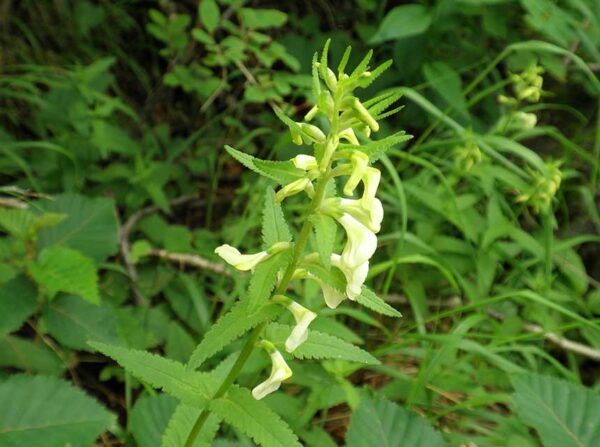
The flowers are pale yellow, twisted to one side, and clustered in large numbers on a single stem. The leaves are narrow and triangular, 3–8 cm long, with coarse serrations along the edges. The stem is angular, and the numerous leaves are arranged alternately.
| Family | Bellflower Family |
|---|---|
| Points to Observe | Gokurakudaira, Hatchozaka |
| Flowering Period |
/ / |
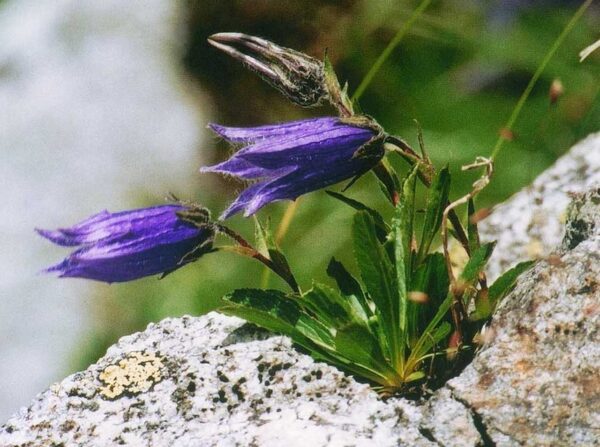
The flowers are a deep blue-purple and grow sideways. They are five-lobed at the tips and have long hairs on the inner surface. Several leaves emerge from the base of the plant; they are spatulate in shape and have coarsely serrated edges. This flower closely resembles the rock bellflower, but the rock bellflower is not found in the area around Senjōjiki Cirque.
| Family | Lily Family |
|---|---|
| Points to Observe | Senjojiki Cirque, Hatchozaka |
| Flowering Period |
/ / |
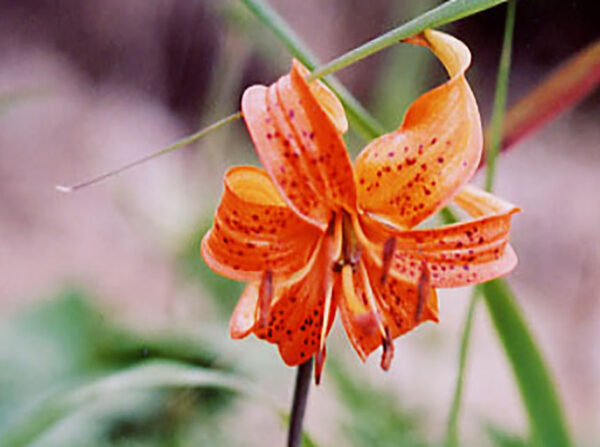
The flowers grow in clusters of 1 to 3, facing downward, and are 5 to 6 cm in diameter. They are red with purplish-brown spots on the inner surface. The leaves are 7 to 13 cm long. The plant is called “Wheel Lily” because the leaves grow in 1 to 3 tiers in a wheel-like (radial) pattern along the middle of the stem.