| Family | Geranium Family |
|---|---|
| Points to Observe | Near Nogai Pond |
| Flowering Period |
/ / |
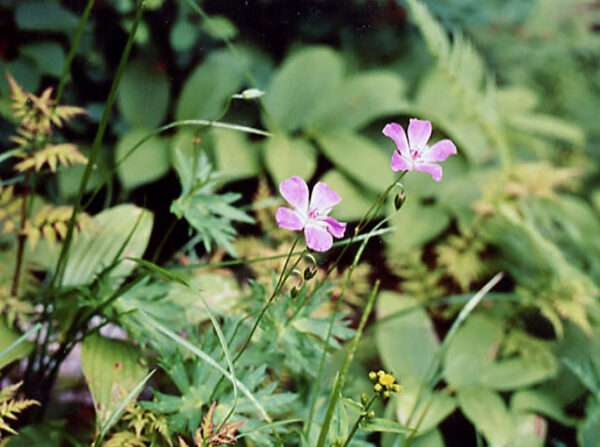
It grows wild primarily in the subalpine zone. The meaning of “Fūro” in its name, “Hakusan Fūro,” remains a mystery. The flowers are about 3 cm in diameter, with reddish-purple petals bearing dark red veins. The leaves are palmately deeply lobed into 5 to 7 segments. The lobes are diamond-shaped, further subdivided into smaller segments, and have pointed tips.
| Family | Aster Family |
|---|---|
| Points to Observe | Near Hotel Senjojiki, Near Kengai Pond, Near Nogai Pond |
| Flowering Period |
/ / / |
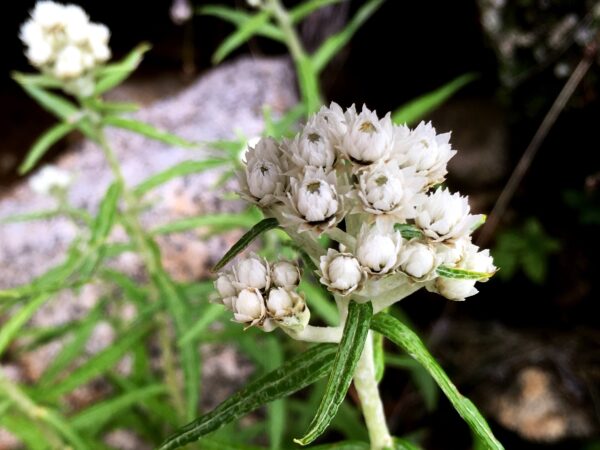
The stems are about 30 to 70 cm tall and bear fluffy hairs. The leaves are 6 to 9 cm long and 6 to 15 mm wide, with visible veins. What appears to be white petals are actually parts of the leaves that once enveloped the bud, while the yellow part is the actual flower. Because its ecology resembles that of Hahakogusa and it grows wild in sunny grasslands from mountainous to alpine zones, it is called Yamahaha.
| Family | Gentian Family |
|---|---|
| Points to Observe | Senjojiki Cirque |
| Flowering Period |
/ / / |
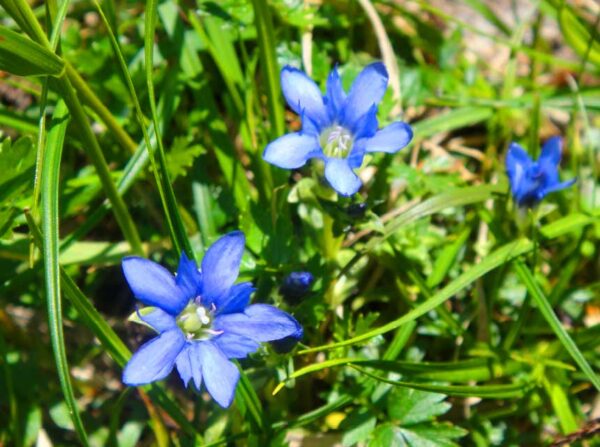
The leaves are oval-shaped and about 5 to 12 mm long. The flowers are deep blue-purple and about 15 mm in diameter; they open when exposed to sunlight, but remain closed after sunset, as well as on cloudy or rainy days. It is said that the plant’s name comes from the fact that its roots are much more bitter than a bear’s gallbladder, and the bitterness is likened to that of a dragon’s gallbladder—a mythical creature considered to be of higher rank than a bear.
| Family | St. John's Wort Family |
|---|---|
| Points to Observe | Senjojiki Cirque |
| Flowering Period |
/ / / |
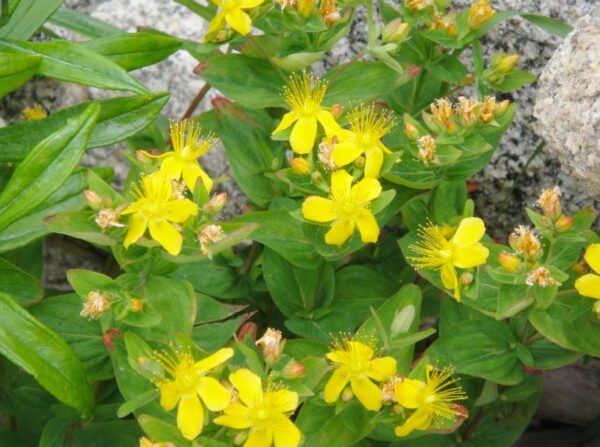
The stems mostly grow in clusters of a few, and when you hold the leaves up to the light, you can see a very small number of indistinct black and light spots. Black spots line the edges of the leaves. The flowers are somewhat larger than those of other St. John’s wort species, measuring about 20–25 mm in diameter. The “Otogiri” variety of Shinano Otogiri is said to be named after a Heian-period legend: “The falconer Haruyori kept the medicinal herbs he used to treat his falcons a secret, but his younger brother revealed them, so he had him executed.” It is said that the black spots on the flowers and leaves are the blood that spattered at that time.
| Family | Lamiaceae Family |
|---|---|
| Points to Observe | Senjojiki Cirque, Gokurakudaira, Hatchozaka |
| Flowering Period |
/ / |
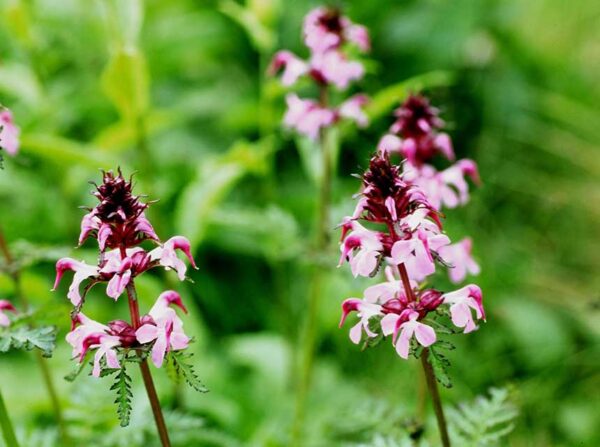
The beauty of its leaves is the origin of its Japanese name. “Shiogama” refers to the scenic view of salt kilns lining the coast and beautifully adorning the beach; it seems the name was derived from the idea that these beautiful salt kilns on the beach (“hama”) extend to the beauty of the leaves themselves (“ha made”). The leaves grow in whorls of four—sometimes three to six—at each node of the stem, and the lower leaves lack petioles. The flowers are reddish-purple, and the upper petals have slender, beak-like tips.
| Family | Lily Family |
|---|---|
| Points to Observe | Senjojiki Cirque |
| Flowering Period |
/ / |
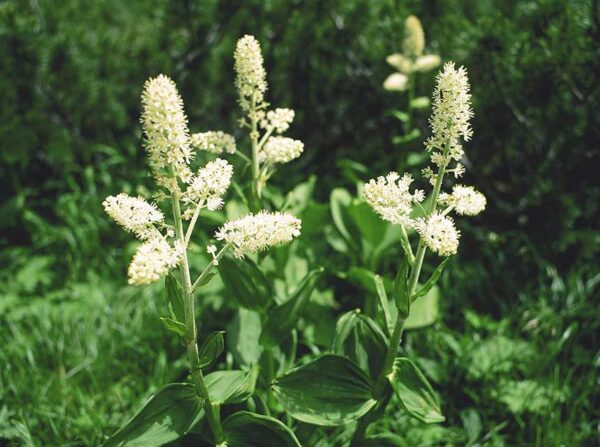
A perennial plant of the genus Cyperus. It is large, and its clumps are conspicuous. It seems to have been given this name because its flowers resemble those of the plum tree and its leaves resemble those of the Huilan orchid. The flowers are about 8 mm in diameter. The leaves are oval-shaped and grow in large numbers. It is said to “bloom only once every few years”; while some years it vibrantly colors the Senjōjiki area, there are other years when almost no flowers can be seen. However, please be careful, as it is a poisonous plant. The way to distinguish it from the Baikeisō is by the color of its flowers; the Baikeisō has green flowers.
| Family | Dianthus Family |
|---|---|
| Points to Observe | Entire Area |
| Flowering Period |
/ / / |
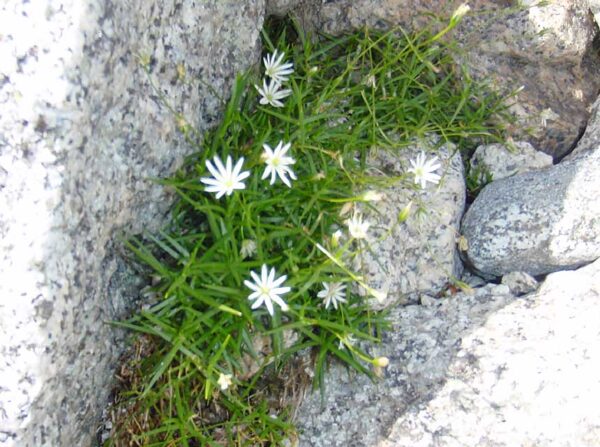
This flower has a very long blooming period and produces pure white flowers about 15 mm in diameter. Although it has five petals, the center is deeply lobed, making it appear as if there are ten. The leaves are slender and 15–30 mm long; unlike the needle-like leaves of the mountain clover, the leaves of the rock clover are linear and taper to a point.
| Family | Aster Family |
|---|---|
| Points to Observe | Gokurakudaira, Hondake |
| Flowering Period |
/ / |
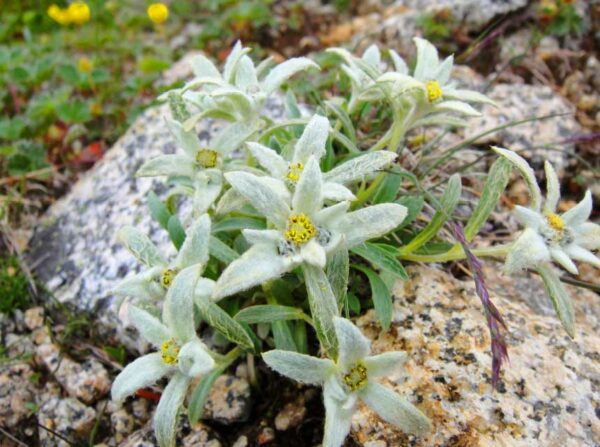
This plant is native to the Central Alps and is also known as Komausuyukisou. It grows wild on rocky slopes and sandy ground near ridges, but it is now a rare flower designated as an endangered species. Its leaves are covered with fine hairs. These leaves have evolved into white petals, which are densely covered with downy hairs, with the flower at the center.
| Family | Ranunculus Family |
|---|---|
| Points to Observe | Senjojiki Cirque, Hatchozaka |
| Flowering Period |
/ / |
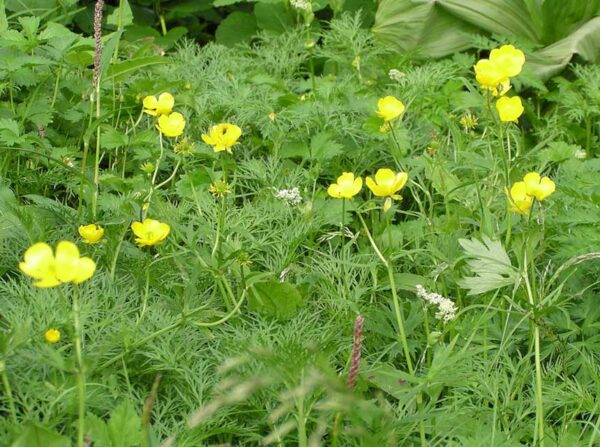
The double-flowered blooms are about 2.3 cm in diameter and a vivid yellow. Because of their color, they are said to resemble the phoenix (a mythical bird of good omen that has appeared in ancient Chinese legends). It is often mistaken for Shinano-kinbai, but it differs in that the lobes of the upper leaves are finer, the flowers have a glossy sheen, and the petals are uniformly shaped. The leaves are 3–5-lobed, and the lobes are further subdivided into smaller segments.
| Family | Dianthus Family |
|---|---|
| Points to Observe | Gokurakudaira, Maedake, Nakadake, Hondake |
| Flowering Period |
/ / |
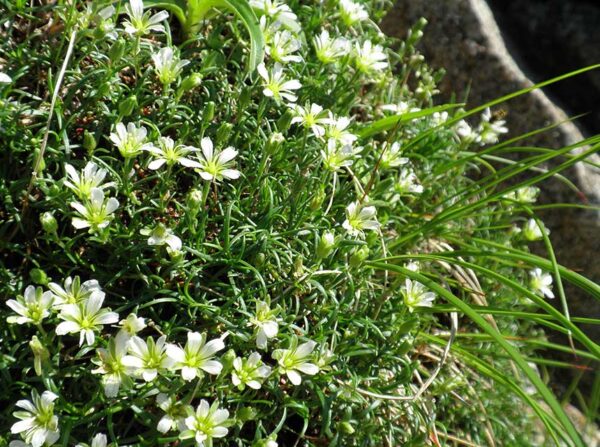
The name “Tsumekusa” (literally, “bird’s claw grass”) comes from the resemblance of its slender leaves to a bird’s claws. The flowers bloom at the tips of the stems. The petals are oblong with rounded tips and feature three translucent veins; variations in width and length are also observed in the shape of the petals. The stems branch profusely, forming large clumps, and the needle-like leaves, 8–15 mm long, grow densely.
| Family | Crassulaceae Family |
|---|---|
| Points to Observe | Hatchozaka |
| Flowering Period |
/ / |
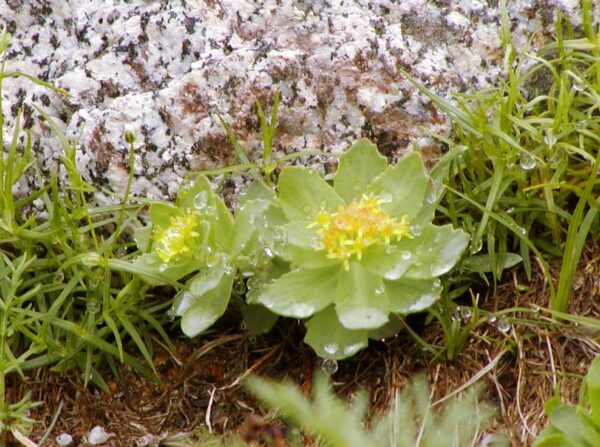
When one mentions Benkei, one thinks of Musashibō Benkei, who is also said to be the origin of the phrase “standing firm to the end.” It is said that this flower was named after Benkei because of its hardiness—it does not wither even when cut. It is dioecious. The four petals are slender and a yellow tinged with green. The male flowers are about 8 mm in diameter, while the female flowers have shorter petals and appear rather sparse. The leaves are fleshy and thick, smaller at the base and largest in the middle, with a powdery white color.
| Family | Violet Family |
|---|---|
| Points to Observe | Gokurakudaira, Hatchozaka |
| Flowering Period |
/ / |
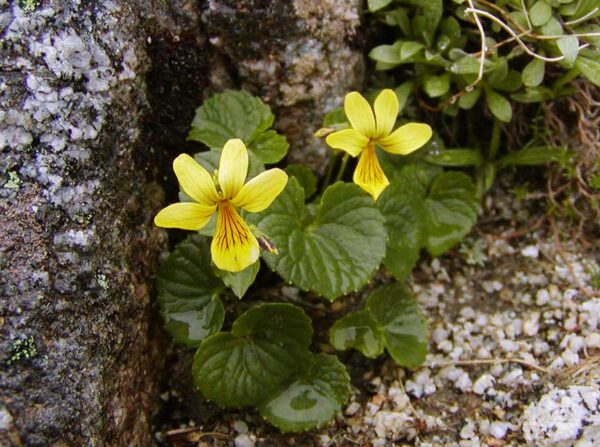
Although it was previously classified as a member of the Takane Violet genus, it has been recognized as a distinct species—a variety of the Takane Violet—based on characteristics such as its hairless leaves. While its flowers closely resemble those of the Yellow-flowered Komano-tsume, it can be distinguished by the shape of its leaves and the fact that it does not grow in grasslands. Its hairless leaves are glossy, dark green, and pointed at the tips.